
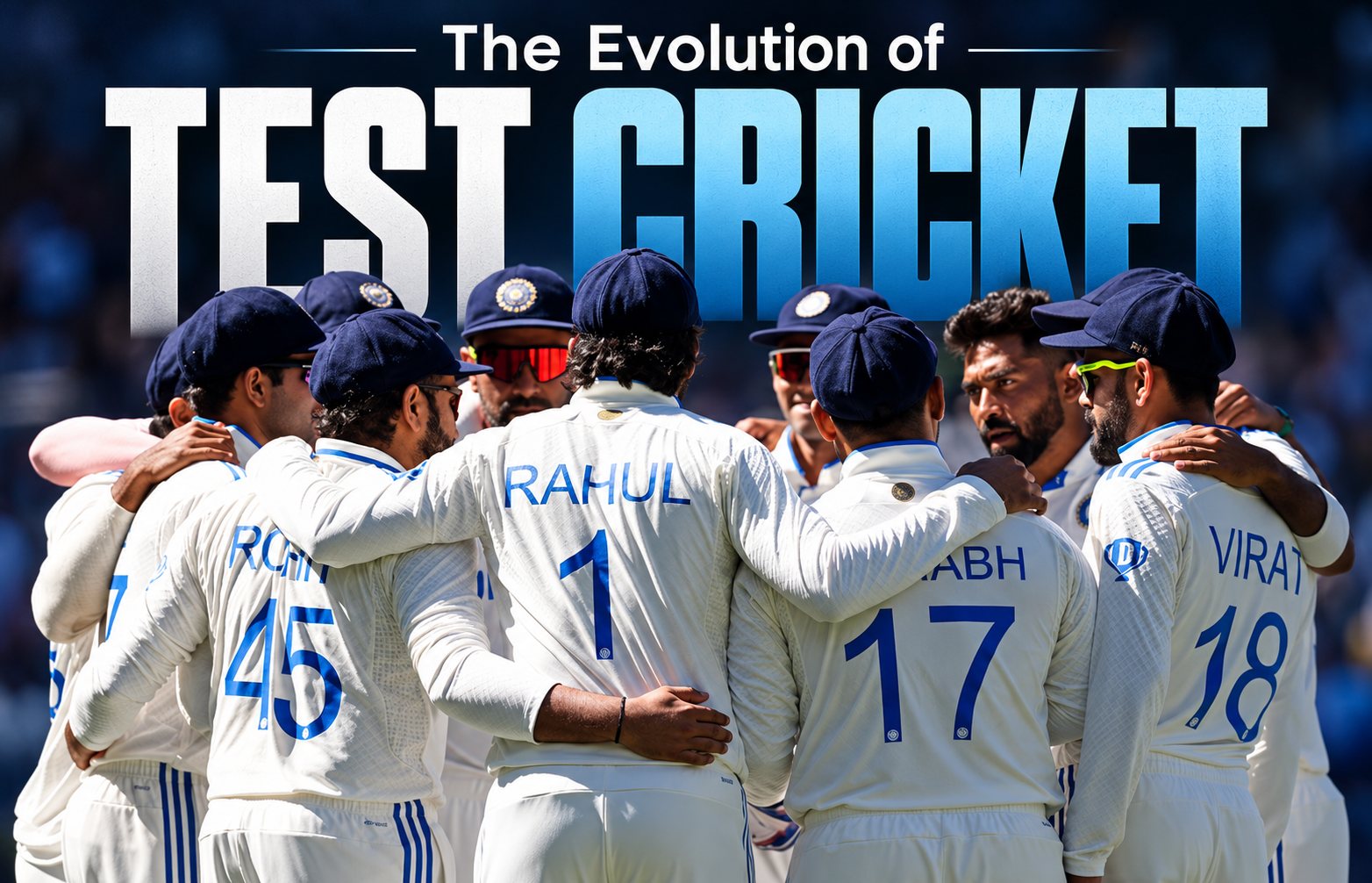
The Evolution of Test Cricket
Test cricket is one of the oldest and most prestigious formats of the sport. It is a game of patience, skill, and strategy, where every session can bring new challenges for players. In this article, we will explore the history and development of Test cricket, the impact of technology on the game, some of the most famous rivalries, and how the role of captains and players has changed over time. We will also look at the challenges Test cricket faces today and how it might grow in the future.

The Origins and Evolution of Test Cricket
Test cricket started in 1877 when Australia and England played the first-ever Test match in Melbourne. Back then, the game was very different, with no standardized rules or regular fixtures. As time passed, the game became more organized, and countries started playing more Test matches. Over the years, Test cricket has improved, with better equipment and changes in playing strategies. Today, it is known as the true test of a cricketer's ability, pushing players to perform under pressure and across five long days.
The Influence of Technology on the Game
Technology has transformed Test cricket in many ways. Television broadcasts brought the game into millions of homes, making it more popular globally. Modern tools like Hawk-Eye for tracking the ball, DRS (Decision Review System), and slow-motion cameras have made the game more accurate, fair, and exciting to watch. On the field, player fitness and strategy have improved thanks to new technologies that help players track their performance. These advancements have not only enhanced the fan experience but also made Test cricket more transparent and precise.

Historic Rivalries and Iconic Test Series
Test cricket has seen many exciting rivalries and unforgettable series. The Ashes, a series between England and Australia, is the most famous, with dramatic moments like the 1981 "Botham's Ashes" and the thrilling 2005 series that went down to the wire. Other rivalries, such as India vs. Pakistan and South Africa vs. Australia, have also created memorable clashes. These rivalries are about more than just cricket; they bring out national pride and fierce competition, making every series a historic event. The pressure of these matchups has helped produce legendary players who are celebrated for their on-field heroics.
The Changing Role of Captains and Players
The role of captains in Test cricket has changed a lot over the years. In the past, captains mostly made tactical decisions, but today, they are also responsible for leading the team emotionally and handling external pressures. Players have also become bigger figures in cricket. They are not just athletes; they are leaders, role models, and global stars. Legends like Sir Donald Bradman, Ricky Ponting, and Virat Kohli have raised the bar in terms of leadership, combining exceptional skill with the ability to inspire their teams. The modern Test cricketer is not just a player but a well-rounded individual with a great sense of responsibility.
The Future Challenges and Growth of Test Cricket
Test cricket faces several challenges in the modern era. With the rise of shorter formats like T20s and ODIs, the traditional format has struggled to maintain its audience, especially with the growing popularity of T20 leagues such as the IPL. However, Test cricket continues to hold a special place for fans who appreciate its patience, strategy, and depth.

To strengthen the format and make every Test series more meaningful, the ICC introduced the World Test Championship (WTC) in 2019. The competition brought a league structure to bilateral Test cricket, with participating teams earning points through a series of matches before the top two teams compete in the final. The championship gives teams a clear long-term goal and adds greater significance to individual Test matches and series.

Other innovations, such as day-night Test matches played with a pink ball, have also been introduced to attract larger crowds and improve viewing opportunities. While challenges remain, the World Test Championship and these innovations demonstrate the ICC’s efforts to preserve Test cricket’s traditions while adapting to the modern sporting landscape. With continued support from governing bodies, players, and fans, Test cricket can remain a vital part of international cricket for generations to come.