
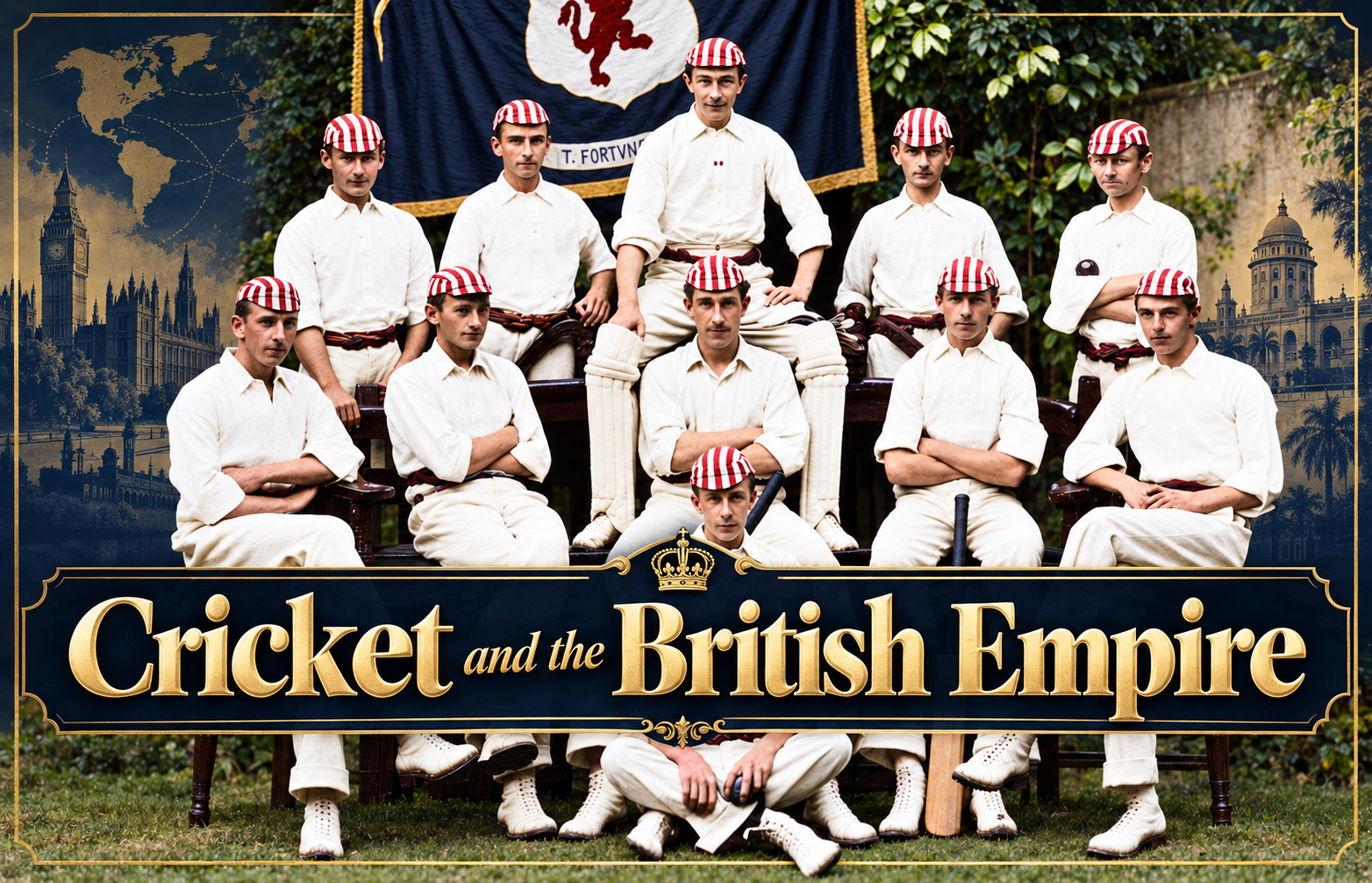
Cricket and the British Empire: From Colonial Influence to National Identity
Cricket, a sport that originated in England, played a significant role during the expansion of the British Empire. As British soldiers, traders, and officials travelled across the world, they introduced the game to their colonies, including India, Australia, and the West Indies. Initially, cricket was seen as a symbol of British culture and social status. However, over time, local communities embraced the sport and transformed it into something much greater.
What began as a game associated with colonial rule gradually became a powerful symbol of national pride, unity, and identity. In many former British colonies, cricket evolved into a way for people to express their independence and celebrate their cultural heritage. Its history reflects not only the spread of a sport but also the changing relationship between colonial influence and national identity.
The Origins of Cricket Under British Influence
Cricket developed in England and became increasingly popular during the expansion of the British Empire. As British communities established themselves in different parts of the world, they brought their sporting traditions with them. British soldiers and officials played cricket in their free time, while schools and social institutions helped introduce the game to local populations.
In countries such as India, Australia, and the West Indies, cricket gradually attracted players from different backgrounds. During the colonial period, the sport was often associated with British customs, discipline, and social status. Learning and playing cricket could provide local people with opportunities to interact with British society and gain recognition within colonial institutions.
However, the game soon moved beyond the boundaries established by its British origins. Local communities developed their own teams, competitions, and playing styles, laying the foundation for cricket to become an important part of their sporting cultures.
The Spread of Cricket Across the Colonies
As the British Empire expanded, cricket found a home in numerous territories. Its development varied from region to region, influenced by local traditions, social structures, and the enthusiasm of the people who adopted it.
In India, cricket was initially played within British military and administrative communities. The Parsis of Bombay were among the earliest Indian communities to embrace the sport, establishing the Oriental Cricket Club in 1848. Over time, Indian players from different communities began participating in organised competitions, helping cricket grow beyond its colonial beginnings.
In Australia, cricket developed into a major sporting tradition during the nineteenth century. The first Australian team to tour England in 1868, made up of Aboriginal players, demonstrated the growing reach of the game and highlighted the contribution of Indigenous Australians to cricket history.
In the Caribbean, cricket spread across the British colonies and gradually became a shared sporting passion across several islands. Despite differences in language, culture, and geography, the game eventually helped connect communities throughout the region.
Although the British introduced cricket to these territories, local players and supporters gave the sport its own character. What had once been associated with British influence became a deeply rooted part of everyday life.
Cricket and the Shaping of National Identity
One of cricket's most significant transformations occurred when colonised communities began using the sport to express their own identities. Rather than simply adopting British traditions, local players adapted the game and challenged the idea that cricket belonged exclusively to the colonial rulers.
In India, cricket became an important avenue for demonstrating sporting ability and challenging racial and social barriers. Indian players increasingly competed against British teams, proving that the game could be mastered by people from different backgrounds. Following independence in 1947, the Indian national cricket team became a symbol of the country's growing international presence and collective pride.
Australia developed its own strong cricketing identity through its rivalry with England, particularly in the Ashes series, which began in 1882. Although Australia shared many sporting traditions with Britain, its performances against England helped establish a distinct national identity.
In the West Indies, cricket acquired an especially powerful cultural and political significance. The regional team brought together players from different Caribbean nations and territories, creating a shared identity that extended beyond individual islands. Their success against England and other major cricketing nations challenged colonial-era assumptions and became a source of immense pride.
These examples demonstrate how cricket gradually changed from a sport associated with the British Empire into a platform for expressing independence, achievement, and national belonging.
Cricket's Cultural Legacy in the British Empire
Cricket's relationship with the British Empire was complex. The sport was sometimes used to promote British customs, values, and ideas of social discipline. Schools, universities, military establishments, and colonial institutions helped establish the game in different territories.
However, cricket also created opportunities for cultural exchange and social change. Local communities did not simply accept the sport as it was presented to them. They developed their own clubs, competitions, heroes, and traditions, gradually reshaping its meaning.
In several colonies, access to cricket was initially influenced by race, class, and social status. Participation in the game could reflect the inequalities of colonial society. Yet, as more local players entered organised cricket, the sport also became a space in which these barriers could be challenged.
Cricket therefore represents both the influence of colonial rule and the ability of colonised societies to adapt inherited traditions for their own purposes. Its lasting cultural legacy is not simply British; it also belongs to the countries and communities that transformed the game.
The Transformation of Cricket in Post-Colonial Nations
Following independence, cricket took on new significance in many former British colonies. It was no longer merely a reminder of colonial rule. Instead, it became a means of celebrating national achievements, bringing communities together, and gaining recognition on the international stage.
For India, the 1983 Cricket World Cup victory was a defining moment. Under the captaincy of Kapil Dev, India defeated the West Indies in the final to win its first World Cup title. The victory challenged expectations, inspired millions of supporters, and strengthened cricket's place in Indian popular culture. It also helped establish the foundations for the sport's enormous growth in the decades that followed.
In the West Indies, cricket became a powerful symbol of regional unity and achievement. Legendary players such as Sir Garfield Sobers represented excellence and inspired generations of cricketers. The West Indies team's dominance in international cricket during the 1970s and 1980s further strengthened its significance as a symbol of Caribbean pride and confidence.
Pakistan, which became independent in 1947, also developed a distinctive cricketing identity. Its national team achieved international recognition through major performances, including its 1992 World Cup triumph under Imran Khan.
Across these countries, cricket became much more than a competitive sport. International victories offered opportunities to celebrate national achievements, while legendary players became cultural icons whose influence extended beyond the boundary.
Conclusion
The history of cricket and the British Empire reveals how a sport introduced through colonial expansion can acquire entirely new meanings over time. Although the British initially spread cricket as part of their cultural influence, the people of the colonies embraced the game and transformed it according to their own traditions and aspirations.
In India, Australia, the West Indies, Pakistan, and other former British territories, cricket evolved into a symbol of national pride, unity, and international recognition. The sport's development reflects a broader historical journey in which communities moved beyond colonial influence to establish their own identities.
Today, cricket remains one of the most visible cultural legacies of the British Empire. Yet its modern identity belongs to the millions of players and supporters around the world who have shaped it into a truly international sport. What began as an English game has become a shared global passion, demonstrating how sport can transcend its origins and unite people across cultures and generations.